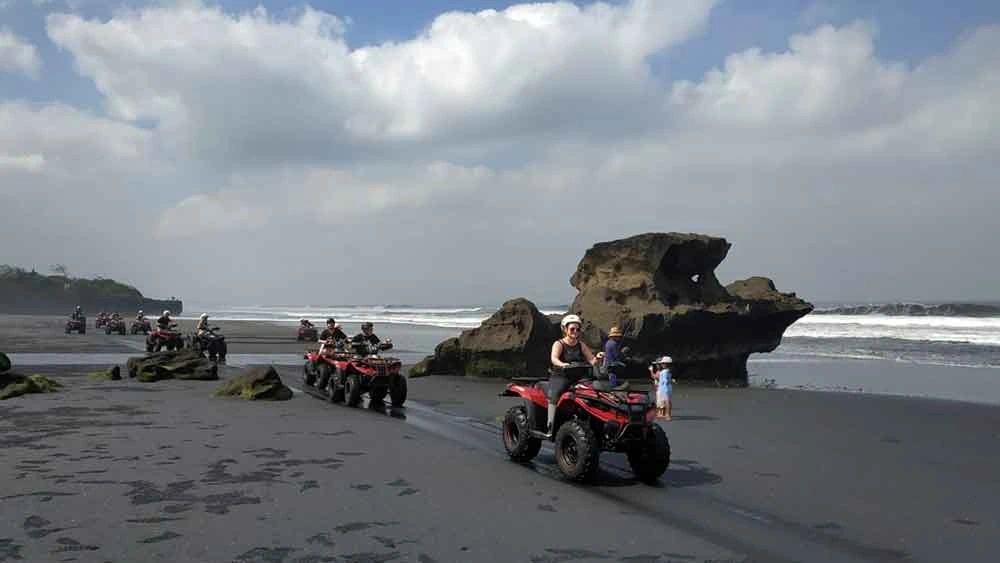
Beach ATV quad biking in Bali is often misunderstood.
Some people imagine riding freely along endless coastlines, while others assume it is just a short add on near the beach, not an actual coastal ride. The reality sits somewhere in between, and understanding that difference is what helps you plan the right experience, avoid disappointment, and ride safely.
This guide is written to help you plan first, decide second. You will learn what beach ATV really means in Bali, where it actually happens, how terrain and seasons affect the ride, and what to expect before you book anything.
If you are considering an ATV experience that involves sand, coastal scenery, and open terrain, here’s what you need to know before choosing a route.
Table of Contents
- What Does “Beach ATV” Really Mean in Bali?
- Why Beach ATV Is Unique in Bali
- Best Beaches & Areas in Bali Where ATV Riding Happens
- What Kind of ATV Terrain to Expect on Beach Riding
- When to Ride (Season & Timing Guide)
- Safety Tips for Beach ATV Riding
- How to Prepare for Beach ATV Riding in Bali (Gear, Clothing & Physical Tips)
- Ride Bali’s Black Sand Coast with Bali Quad Bike
- FAQs About Beach ATV Riding in Bali
What Does “Beach ATV” Really Mean in Bali?
In Bali, the term beach ATV does not always mean riding freely along every shoreline.
There are two very different interpretations that often get mixed up in marketing.
The first is ATV riding directly on the beach, where the track runs along firm sand close to the waterline. This is only possible in certain areas of Bali with wide, stable beaches and minimal foot traffic.
The second is ATV riding near the beach, where the route includes coastal paths, open land, village edges, or river mouths that sit close to the shoreline but are not fully on the sand.
Both are valid experiences, but they feel very different when you ride.
Legal access, local activity, and safety all play a role. Many popular beaches in Bali are not suitable for ATV riding due to crowd density, soft sand, or environmental restrictions. That is why true beach ATV routes exist only in specific zones and often operate with seasonal adjustments.
Understanding this distinction helps set realistic expectations and prevents booking a ride that does not match what you are actually looking for.
Why Beach ATV Is Unique in Bali
Riding an ATV on sand feels very different from riding on soil, jungle tracks, or rice field paths.
Sand changes how your ATV responds. Steering becomes lighter, braking distance increases, and throttle control matters more than speed. This is especially noticeable on Bali’s black sand beaches, where the surface is firmer near the waterline and looser further inland.
Tabanan’s black sand behaves differently compared to lighter sand areas. It tends to compact better, which allows for controlled riding when conditions are right. This is one of the reasons why actual beach ATV riding is possible there, while many other beaches in Bali are not suitable.
Another factor is space. Beach ATV requires wide, open stretches with minimal public activity. That combination is rare in Bali, which makes coastal ATV routes more exclusive and highly location dependent.
This uniqueness is not about being extreme. It is about riding in an environment that constantly changes beneath your wheels and requires more awareness than standard off road tracks.
Best Beaches & Areas in Bali Where ATV Riding Happens
Beach ATV riding in Bali is not about ticking off famous beach names. It is about understanding where the terrain, space, and conditions actually allow ATVs to operate safely and consistently.
Some areas support direct beach riding, others only allow coastal access or adjacent tracks. Knowing the difference helps you choose a route that matches your expectations before you book.
Here’s how the main coastal zones in Bali differ when it comes to ATV riding.
1. Tabanan Black Sand Beach Areas
Tabanan is one of the few regions in Bali where actual beach ATV riding can take place under the right natural conditions.
Along the Kelating coastline and certain coastal stretches between Seseh and Balian, the black sand beaches are wider, firmer, and significantly less crowded than southern resort beaches. This combination is what makes controlled ATV riding possible here when tides and weather align.
Beach sections in Tabanan are rarely isolated. They are usually connected with village paths, open coastal land, and rice field tracks, creating a route that feels continuous rather than repetitive. Riders experience the beach as part of a broader landscape, not as a short photo stop.
Speed on the sand is carefully managed due to changes in firmness closer to the waterline and reduced visibility over open beach stretches. This is why Tabanan suits riders who want a genuine coastal riding feel, not just a symbolic beach backdrop.
Here’s why Tabanan is often considered the most realistic option for beach-focused ATV routes in Bali.
2. South Bali Coastal Paths Near Kuta, Legian & Serangan
In South Bali, ATV riding is shaped more by crowd density and land use than by sand quality.
Beaches in areas like Kuta and Legian are heavily used for tourism and local activities, making direct ATV riding on the sand impractical. As a result, routes here tend to follow coastal paths, open land, and managed tracks that run parallel to the shoreline rather than on the beach itself.
The sand in these areas is also softer and more variable, which limits safe riding zones. Riders still experience ocean views, sea air, and coastal scenery, but the terrain is more mixed and the pace more controlled.
These routes are better suited for riders who want a coastal atmosphere without expecting long, uninterrupted beach sections.
Here’s how South Bali offers a coastal-style ATV experience without true beach riding.
3. Other Coastal Options in Bali
In North and East Bali, some ATV routes include short coastal or beach-adjacent sections, often near river mouths or less developed shorelines.
These sections are typically brief and depend heavily on seasonal conditions. They add variety to inland tracks rather than serving as the main riding surface. Access can change due to tides, weather, or local activity, making consistency less predictable.
For most riders, these areas are best viewed as terrain transitions, not dedicated beach ATV destinations.
Here’s how coastal access in these regions complements, rather than defines, the overall ATV experience.
What Kind of ATV Terrain to Expect on Beach Riding
Beach ATV riding in Bali is not about racing across flat sand. The experience is built around reading the surface, choosing the right line, and adjusting smoothly as the terrain shifts beneath the wheels.
On most beach routes, especially black sand beaches, the surface can change within just a few meters. Riders quickly learn that where you ride matters just as much as how fast you go.
In general, you will notice three main terrain characteristics during beach ATV riding:
- Firmer sand near the waterline, created by natural compaction from waves and tides
- Softer, looser sand further inland, which requires steadier throttle control
- Natural riding lines, where repeated use creates more predictable traction
Guides usually lead riders along these firmer lines, not to limit the experience, but to keep the ride smooth and controlled.
Another defining feature of beach ATV routes is how often the surface changes. The track rarely stays on sand alone. Instead, it flows naturally between different textures:
- Black sand beach sections
- Compact soil paths near the coast
- Rice field or village connectors before returning to the shoreline
Each transition subtly changes how the ATV feels, especially in steering response and braking distance. This is what gives beach ATV riding its rhythm. It is less about overcoming obstacles and more about staying in sync with the terrain as it evolves.
When to Ride (Season & Timing Guide)
Timing plays a bigger role in beach ATV riding than on jungle or inland routes. Sand conditions are influenced by weather, tides, and daily temperature shifts, all of which affect how the ride feels.
Seasonally, there are clear differences.
During the dry season, beach surfaces tend to be more consistent. Firmer sand creates longer rideable sections, clearer lines, and a generally smoother flow from start to finish.
In the rainy season, sand can become softer, especially near river mouths where water levels rise. This does not automatically stop rides, but routes are often adjusted to focus on safer, more compact areas.
Beyond seasons, the time of day also shapes the experience:
- Morning rides offer cooler air, firmer sand, and quieter surroundings before tides shift
- Afternoon rides feel warmer and more active, with softer sand that slows the pace and increases technical awareness
- Sunset rides emphasize atmosphere along the coast, especially on black sand beaches, with guides managing speed carefully as light changes
Understanding these timing differences helps you choose a ride that matches your comfort level, not just your schedule.
Safety Tips for Beach ATV Riding
Beach ATV riding is generally safe when guided properly, but sand behaves very differently from dirt or gravel. Knowing how to work with it makes a noticeable difference.
The foundation of safe beach riding is smooth control. Sand does not respond well to sudden inputs, especially when turning or slowing down.
A few key principles guide most riders through beach terrain:
- Maintain steady momentum, avoiding sharp throttle changes that can cause wheels to dig in
- Stay relaxed and centered, letting the ATV move naturally rather than fighting it
- Shift weight slightly backward when crossing softer sections to improve traction
It is also important to avoid deep soft zones, which are usually found higher up the beach. These areas may look rideable but can trap the wheels quickly. Guides mark safer lines for a reason, and following them keeps the ride flowing.
Before starting, basic checks matter more than many riders expect. A well fitted helmet, responsive brakes, and clear communication with your guide all contribute to a safer, more enjoyable ride.
Beach conditions can change quickly, but with the right technique and guidance, the experience remains controlled and confidence building rather than intimidating.
How to Prepare for Beach ATV Riding in Bali (Gear, Clothing & Physical Tips)
Good preparation does not make beach ATV riding complicated. It makes it smoother, more comfortable, and far more enjoyable once you are on the sand.
Beach terrain asks different things from your body compared to jungle or dirt tracks. The sun, reflective sand, and constant micro adjustments in balance mean preparation is less about strength and more about endurance and comfort.
What to Wear on a Beach ATV Ride
Clothing choices directly affect how relaxed you feel during the ride. On the beach, protection and breathability need to work together.
Most experienced guides recommend:
- Lightweight, quick-dry clothing, so sand and sweat do not become uncomfortable
- Long sleeves or arm covers, especially for midday rides, to reduce sun exposure
- Closed-toe footwear with a firm sole for better control on footrests
Avoid loose items that can flap or catch wind at speed. Simpler is usually better on the beach.
Footwear and Grip Considerations
Foot positioning matters more on sand than on soil. The ATV may feel stable, but traction shifts constantly under the wheels.
Footwear should:
- Sit securely on the footrest
- Provide enough grip without being bulky
- Allow ankle movement for balance adjustments
Heavy boots are not necessary, but overly soft sandals are a bad idea. Think secure, not stiff.
Sun, Hydration & Physical Comfort
Beach ATV riding exposes you to open elements with little shade. Even a 90-minute ride can feel longer if you underestimate the environment.
Before riding, it helps to:
- Apply sunscreen to exposed areas
- Hydrate well, especially for afternoon or sunset sessions
- Stretch lightly to loosen shoulders and lower back
Physically, beach ATV riding is low impact, but it rewards riders who stay relaxed. Tension in the arms or shoulders makes steering feel heavier than it actually is.
Body Positioning Basics for Sand Riding
Unlike dirt tracks, sand requires subtle weight shifts rather than aggressive movement.
As a general guide:
- Keep your body centered on firm sections
- Shift slightly back when entering softer sand
- Look ahead, not down, to maintain smooth lines
These small adjustments make the ATV feel predictable instead of tiring.
Ride Bali’s Black Sand Coast with Bali Quad Bike
If you are looking for a beach ATV experience that focuses on real coastal riding, not just a short sand add-on, routes in Tabanan’s black sand areas offer one of the most complete options in Bali.
At Bali Quad Bike, the experience is designed around how the terrain actually works. Beach sections are wide and firm, village connectors feel natural, and the ride flows continuously rather than stopping at staged points.
This is not a conveyor belt activity. It is a guided ride built on space, variety, and respect for the coastal environment.
If you want to explore Bali’s beaches from the seat of an ATV, this is where the experience begins.
Book your ATV Quad Bike Bali experiene here.
FAQs About Beach ATV Riding in Bali
Beach ATV riding raises a lot of practical questions, especially for first timers. These answers focus on real riding conditions rather than marketing promises.
Can You Ride Directly on Every Beach in Bali?
No. Not all beaches allow or support ATV riding.
Only certain areas, such as parts of Tabanan’s black sand coastline, have the space, sand density, and low crowd levels needed for safe beach riding. In many other areas, rides happen near the beach, using coastal paths rather than open sand.
Is Beach ATV Riding Safe for Beginners?
Yes, when done on suitable routes with proper guidance.
Beach ATV routes are usually designed to be flowing and controlled, not technical or extreme. Guides manage speed and line choice, making the experience accessible even for riders with no prior ATV experience.
Do I Need Previous ATV Experience?
No experience is required.
Most riders are first timers. Before starting, guides provide a basic briefing on throttle control, braking, and balance. The ride itself builds gradually, allowing confidence to grow naturally.
What Is the Average Ride Duration?
Most beach ATV rides in Bali last between 90 and 120 minutes.
This includes transitions between beach, coastal, and village terrain. The duration is long enough to feel complete without becoming physically draining.
How Much Does Beach ATV Riding Usually Cost?
Prices vary depending on location, duration, and inclusions.
In general, beach ATV experiences are priced within the same range as jungle or rice field ATV rides. What you are paying for is access to suitable terrain and a guided route that keeps the experience safe and enjoyable.
How useful was this post?
Click on a star to rate it!
Average rating 0 / 5. Vote count: 0
No votes so far! Be the first to rate this post.