
Can You Go Quad Biking in the Rain? – Yes, you can often go quad biking in the rain, provided the weather and trail conditions remain safe. In Bali, rain can turn dirt tracks into muddy off road routes, but it can also reduce traction, affect visibility, and make certain sections more challenging.
At BaliQuadBike.id, we want you to know what to expect before your ride. Light rain does not automatically mean your ATV adventure has to stop, but heavy rain, lightning, flooding, or unsafe trail conditions may require a delay, route adjustment, or rescheduling.
The important question is not simply whether it is raining. It is whether the conditions are suitable for a safe ride.
What Happens When You Go Quad Biking in the Rain?
Rain changes the surface beneath your ATV, so the experience can feel different from riding on a dry track. Here are the main changes you should expect.
1. Trails Become Wetter and More Slippery
When rain falls on dirt tracks, the surface can become softer, muddier, and more slippery. Your ATV may have less traction when turning, accelerating, or braking, particularly on uneven ground.
This means you need to ride at a controlled pace and pay closer attention to the route. Avoid sudden turns, sharp acceleration, or trying to move faster than the rider ahead of you.
2. Mud and Water Splashes Can Increase
One of the noticeable differences is the amount of mud and water you may encounter. Puddles can become larger, and sections that were relatively firm before the rain may turn muddy.
If you enjoy a messy off road adventure, these conditions can add to the experience. However, the amount of mud depends on recent rainfall, drainage, and the specific track. Rain does not guarantee deep mud or water crossings on every route.
3. Visibility Can Become More Limited
Heavy rain can make it harder to see the trail clearly, especially when water splashes onto your goggles or helmet visor. Rain can also make obstacles less obvious when the ground is covered by puddles or flowing water.
Keep a safe distance from the ATV ahead, watch the route carefully, and follow your guide’s instructions. If you cannot see the path clearly, do not continue until it is safe to do so.
4. The Ride May Feel More Challenging
Wet terrain can require more attention and careful control than dry ground. Slopes, rocks, muddy corners, and uneven sections may become more difficult to navigate.
That does not mean every rainy ride is extreme. The level of difficulty depends on the route, the amount of rain, and your riding ability.
Is Quad Biking in the Rain Safe?
Quad biking in light rain can be manageable when the track remains suitable, the ATV is in safe working condition, and you follow the safety instructions provided before and during the ride. However, wet weather increases certain risks, particularly slipping, losing traction, and reduced visibility.
Before riding with BaliQuadBike.id, pay attention to the safety briefing and practice session. Make sure you understand how to accelerate, brake, steer, and maintain a safe distance before entering the main track.
While riding in wet conditions:
- Reduce your speed when approaching muddy or slippery sections.
- Avoid sudden braking, sharp turns, and abrupt acceleration.
- Follow your guide’s instructions instead of attempting obstacles independently.
- Keep both hands on the handlebars and your feet on the designated footrests.
- Do not enter deep or fast flowing water unless the crossing has been assessed and approved as part of the route.
For a more complete overview of preparation and riding precautions, read our ATV Quad Bike Bali Safety Guide.
Best Places to Go Quad Biking in Bali in the Rain
Rain can transform Bali’s off road trails, making dirt tracks muddier and uneven terrain more challenging. If you want a quad biking experience with plenty of mud and natural scenery, these locations are worth considering, depending on rainfall and current track conditions.
1. Ubud Jungle Trails and Caves
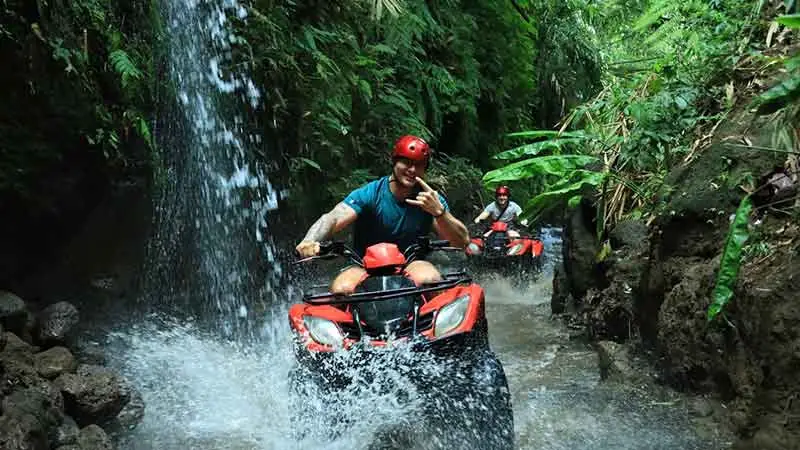
Ubud’s surrounding countryside offers ATV routes with jungle scenery, muddy paths, and, on selected tracks, tunnels or cave like sections. These features create a varied ride when the ground is wet, although slippery surfaces can make steering and braking more demanding.
Rainy day highlight: Muddy jungle trails and enclosed track sections that add variety to the ride.
2. Taro Village, Gianyar

Taro and the wider northern Ubud area offer forested countryside and bamboo lined landscapes, with ATV routes varying by provider. Rain can soften dirt tracks and create muddier sections, while nearby waterways may rise after prolonged or heavy rainfall.
Rainy day highlight: A countryside ride with forest scenery and potentially muddier trails. Water crossings should only be attempted when the route is confirmed safe.
3. Payangan Adventure Tracks

Payangan is worth considering if you prefer a more challenging inland ATV experience. Selected routes feature jungle terrain, slopes, uneven ground, and muddy sections that can become more slippery after rain.
Rainy day highlight: Natural mud and varied terrain for riders looking for a more adventurous trail, subject to weather and track conditions.
When Should a Quad Bike Ride Be Delayed or Cancelled?
Not every rainy ride should go ahead. There is an important difference between ordinary rainfall and conditions that make an off road route unsafe.
1. Light Rain or Drizzle
Light rain may allow a ride to continue if visibility remains clear enough, the track is manageable, and there are no other safety concerns.
You may encounter wetter ground and more mud than expected, so follow the same precautions you would use on any slippery trail.
2. Heavy Rain and Thunderstorms
Heavy rain can reduce visibility, increase runoff, and make slopes or muddy sections harder to navigate. Lightning introduces another hazard for an outdoor activity.
If these conditions develop, a departure may need to be delayed, the route changed, or the ride rescheduled. The decision should be based on conditions at the actual riding location rather than the weather forecast alone.
3. Flooding and Fast Flowing Water
Rain can cause water levels and currents to rise. A puddle or crossing that seemed manageable earlier may no longer be suitable.
Never attempt to cross deep or fast flowing water on your own. If a crossing is not approved by your guide, do not enter it.
What Should You Wear for Quad Biking in the Rain?
If you decide to ride in wet weather, prepare for mud and water rather than trying to keep every item clean.
- Wear comfortable clothes that can get dirty. Lightweight clothing that dries relatively quickly is practical for an outdoor ride. Avoid bringing clothes that you would not want exposed to mud.
- Use suitable footwear and protective equipment. Wear the helmet, boots, and other safety equipment provided for your activity. Make sure everything fits correctly before setting off.
- Bring a change of clothes. You may finish the ride considerably wetter or muddier than you expected, even if the rain stops during the activity.
- Protect your personal belongings. Keep phones and valuables in a suitable waterproof pouch or leave unnecessary items somewhere secure. Do not carry loose belongings that could fall off during the ride.
- Bring a towel if needed. Check which facilities and personal items are available at your selected package before departure.
For more preparation advice, see related guides below:
Is Rainy Weather a Good Time for Quad Biking in Bali?
It depends on the kind of experience you want.
During Bali’s wetter months, some off road tracks become muddier and the surrounding vegetation can look especially green. Riders who enjoy getting dirty may appreciate these conditions, provided the route remains safe.
In drier weather, tracks may be firmer and visibility more predictable. This can be more comfortable if you prefer a less muddy ride or feel uncertain about slippery terrain.
Neither season is automatically better for everyone. If your priority is a particular type of trail, ask about the route and its current condition instead of relying on the season alone.
You can also read our guide to the best time for a quad bike ride in Bali to compare what different weather conditions can mean for your experience.
Ready for a Rainy Day ATV Quad Bike Adventure in Bali?
Rain can make Bali’s off road trails muddier and more challenging, adding a different feel to your ATV adventure when conditions are suitable. At BaliQuadBike.id, you can choose between two distinct riding experiences.
- Ubud ATV Ride: Explore inland trails surrounded by Bali’s countryside. Discover our Ubud ATV Ride.
- Uluwatu ATV Quad Bike Adventure: Experience the rocky and limestone terrain of South Bali. Explore our Uluwatu ATV Adventure.
Choose the experience that suits your plans and let our team help you arrange your ride based on the available packages and track conditions.
Ready to ride? Book your Bali ATV adventure with BaliQuadBike.id.
Frequently Asked Questions About Quad Biking in the Rain
Yes, a quad bike ride can often continue in light rain when visibility and trail conditions remain suitable. Wet surfaces still require controlled speed and extra caution, so follow your guide’s instructions.
It can. Rain may reduce traction, soften dirt tracks, create puddles, and make some obstacles harder to navigate. The level of difficulty depends on the route and how much rain has fallen.
Beginners may be able to ride in light rain if the route is suitable and they can follow the safety briefing and riding instructions. If you feel uncomfortable with slippery terrain, tell your guide and ask about the available options.
Wear clothes that can get muddy, use the protective equipment provided, and bring a change of clothes. A towel and waterproof pouch for personal belongings may also be useful.
The dry season may offer firmer tracks, while wet weather can create muddier and more challenging conditions. The better choice depends on your comfort level, preferred terrain, and the actual weather on the day.
Do not assume a ride will proceed during a thunderstorm. Lightning, heavy rain, and poor visibility can make an outdoor activity unsafe. Follow the instructions from your guide and confirm any delay or rescheduling with our team.