Bali is known for its temples, rituals, and spiritual rhythm, but few travelers realize that some of the island’s most sacred paths are not reached by walking. They are hidden behind jungle lines, rice fields, and river corridors that locals have used for generations.
The Bali Quad Bike Temple Run is not just another ATV activity. It is an off-road journey that blends adventure riding with cultural discovery, taking you through forest trails, village passages, and sacred temple routes that still hold meaning for the local community today.
If you are looking for an ATV experience in Bali that feels deeper, more authentic, and rooted in local tradition, the Temple Run is where adventure meets spirituality.
Table of Contents
- What Is the Bali Quad Bike Temple Run?
- Why This ATV Tour Is Unique in Bali
- What You’ll See along the Temple Run Route
- What Happens During the Temple Run
- Top Temple Run Routes in Bali (Most Popular Trails)
- How Much Does the Temple Run Cost?
- What’s Included in a Temple Run Package
- How to Book Your Temple Run at the Best Price
- FAQs About Bali Quad Bike Temple Run
What Is the Bali Quad Bike Temple Run?
Before choosing this route, it helps to understand what truly defines a Temple Run compared to standard ATV tours in Bali.
The Bali Quad Bike Temple Run is a guided off-road ATV experience that follows traditional access routes connecting villages, jungle shrines, and small temples. These paths were never designed for tourism, they exist because they are still used by local communities during ceremonies and daily life.
Instead of focusing on extreme obstacles, the route emphasizes natural flow, scenic continuity, and cultural context. Riders move through jungle trails, rice fields, river crossings, and village passages that naturally connect sacred points across the landscape.
The term “Temple Run” refers to the journey itself. You are not riding to a single temple, but riding through a network of spiritually significant land, accompanied by local guides who understand when to explain, when to pause, and when to simply let the environment speak.
Why This ATV Tour Is Unique in Bali
Many ATV tours in Bali share similar terrain, but the Temple Run stands out because of how the route is designed and how the experience is guided.
Before diving into the specific elements, it’s important to understand that this tour is built around balance, not intensity alone.
The Blend of Adventure, Nature, and Balinese Spiritual Culture
Unlike adrenaline focused ATV tracks, the Temple Run balances excitement with awareness. You still ride through muddy sections, forest trails, and water crossings, but these elements are woven into culturally meaningful routes.
Along the way, you may pass jungle shrines, ceremonial gates, and temple access paths that are still actively used during Galungan, Kuningan, and village rituals. The presence of offerings, bamboo structures, and stone altars adds a layer of authenticity rarely found in commercial ATV parks.
This balance makes the tour appealing not only to adventure seekers, but also to travelers who want their Bali experience to feel deeper and more respectful.
The Meaning Behind “Temple Run” in Ubud Tradition
In Ubud and surrounding villages, temples are rarely isolated landmarks. They are connected by natural paths crossing rivers, rice fields, and forest edges.
These routes reflect the Balinese philosophy of Tri Hita Karana, harmony between humans, nature, and spirituality. By following these paths, the Temple Run mirrors how locals move through sacred land, not as spectators, but as participants in the landscape.
This cultural layer transforms the ATV ride from a recreational activity into a journey that carries meaning beyond the ride itself.
What You’ll See along the Temple Run Route
Understanding what you will encounter on the route helps set realistic expectations and highlights why this experience feels different from conventional ATV tours.
Rather than one dominant attraction, the Temple Run is about continuous transitions between nature, culture, and adventure.
1. Ancient Jungle Shrines and Hidden Temples
Some of the temples and shrines you pass are not tourist destinations. They are active spiritual sites maintained by local families and villages.
Guides explain which areas are sacred, why certain spots are treated with respect, and when photography is appropriate. These explanations are short but meaningful, adding context without interrupting the ride’s rhythm.
2. Forest Trails, Mud Tracks, Rivers, and Rice Fields
From a riding perspective, the terrain remains engaging. Expect shaded jungle tracks, muddy paths after rain, shallow river crossings, and open rice field trails that offer wide scenic views.
The route is intentionally designed to stay accessible for beginners while still offering enough variation to keep experienced riders interested.
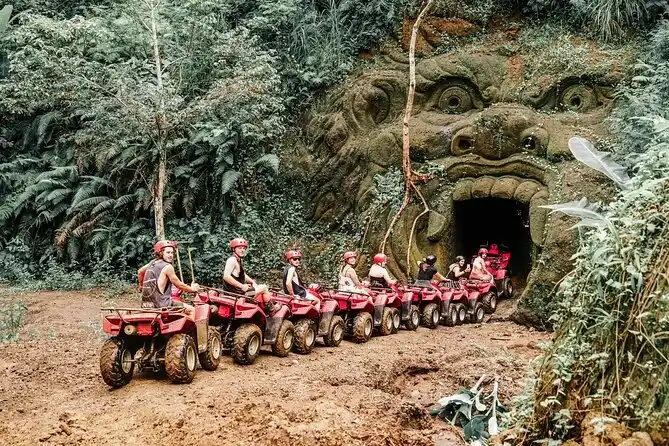
2. Short Tunnels and Local Village Passages
In several sections, the trail passes through short tunnels and narrow village paths where daily life continues around you. Farmers, children, and offerings become part of the scenery, reinforcing that this is a shared space, not a closed attraction.
What Happens During the Temple Run
For many first time riders, knowing how the experience flows from start to finish builds confidence and trust.
The Temple Run follows a structured but relaxed sequence designed to keep riders comfortable while gradually increasing engagement.
- Step 1: Safety Gear Prep and Training
The experience begins with a comprehensive safety briefing. Riders receive helmets, boots, and protective gear, followed by basic ATV training covering throttle control, braking, and body positioning. - Step 2: Starting the Journey through Jungle and Fields
The ride starts on gentler terrain, allowing riders to adjust to the ATV while moving through jungle paths and rice field tracks. This phase builds confidence before reaching more dynamic sections. - Step 3: Visiting Hidden Temples with Local Stories
At selected points, guides briefly pause to explain nearby shrines or temple access paths. These moments provide cultural insight without breaking the overall flow of the ride. - Step 4: Water Crossings and Puddles for Adrenaline Fun
As the route progresses, riders encounter river crossings, puddles, and muddier terrain. Guides assist when needed, especially for beginners, ensuring safety without removing the fun. - Step 5: Cooling Down and Closing Ceremony
The final section slows the pace before returning to basecamp. Riders clean up, relax, and often share experiences with guides and fellow participants, creating a natural conclusion to the journey.
Top Temple Run Routes in Bali (Most Popular Trails)
Although the Temple Run follows the same spiritual off-road concept, each route delivers a very different atmosphere. The landscape, tunnel design, temple density, and riding flow vary depending on location, making each track suitable for different types of travelers.
Below are the most popular Temple Run routes in Bali, chosen based on scenery, cultural presence, and overall riding experience.
1. Temple Run through Kuber Tunnel and Waterfall (Ubud North)
This route is often considered the most iconic Temple Run experience in Ubud. It follows sacred jungle paths that lead riders through the famous Kuber Tunnel, a long natural tunnel carved through dense greenery before opening into a dramatic waterfall section.
What makes this route special is the transition of environments. Riders move from shaded forest trails into the tunnel, then emerge into open space with flowing water and rock formations. The contrast between darkness, light, and water creates a powerful sensory experience that many travelers remember as the highlight of their Bali ATV adventure.
From a riding perspective, the terrain remains beginner-friendly while still exciting. The tunnel section feels adventurous without being intimidating, and guides carefully manage spacing to keep the experience smooth and safe for all riders.
2. Temple Run through KeepAll Jungle and Rice Fields
The KeepAll Jungle and Rice Fields route focuses more on scenic flow and cultural surroundings rather than dramatic obstacles. Riders pass through long jungle corridors before emerging into open rice field landscapes shaped by traditional irrigation systems.
This route offers a slower, more immersive rhythm. The wide trails allow riders to relax, observe village life, and appreciate how temples, shrines, and farming areas coexist naturally in Bali’s countryside. It is common to see farmers working nearby, reinforcing the sense that you are moving through a living environment rather than a staged attraction.
Because of its smoother terrain and open visibility, this route is especially popular among families, couples, and first-time ATV riders who want a calm but authentic Temple Run experience.
3. Temple Run through Hidden Shrines and Bamboo Woods
For travelers seeking a quieter and more spiritual atmosphere, this route delivers a deeply immersive experience. The trail winds through bamboo forests, shaded jungle paths, and lesser-known shrines that are rarely visited by mass tourism.
The bamboo sections create a unique feeling of enclosure and calm. Light filters softly through the leaves, and the sounds of nature replace the usual noise of busier ATV tracks. Guides often share brief stories about the role of these shrines in local ceremonies, adding meaning to the journey without turning it into a lecture.
This route is ideal for travelers who value atmosphere over adrenaline. While the riding remains engaging, the focus is on connection with the landscape and understanding Bali’s spiritual rhythm at a slower pace.
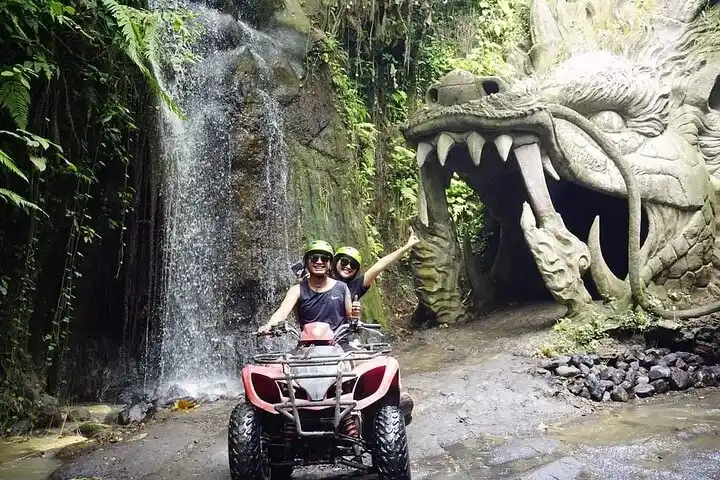
4. Temple Run with Gorilla Cave & Infinity Pools (Singapadu)
The Singapadu Temple Run route is visually one of the most striking. It combines traditional temple paths with dramatic features such as the Gorilla Cave structure and scenic water areas often referred to as infinity pools.
This route appeals strongly to travelers who enjoy unique visuals and dynamic scenery. The cave section adds an element of surprise and adventure, while the surrounding water features and jungle backdrop create excellent moments for photos and short breaks during the ride.
Despite its bold appearance, the route remains well controlled. Guides carefully manage entry points and pacing, ensuring the experience stays safe and enjoyable even for riders with limited ATV experience. It is a popular choice for adventure travelers, content creators, and guests looking for a Temple Run that feels visually distinctive.
How Much Does the Temple Run Cost?
Because the Temple Run is ultimately a variation of the quad bike experience, following spiritual trails and scenic off-road paths, its price aligns with the core packages offered by BaliQuadBike.id, just like other ATV tours on the site. The main difference is how the route is designed, not the structure of what you pay for.
At BaliQuadBike.id, all temple-run-style routes are included under the same pricing structure as the standard quad bike experiences, with transparent, no-hidden-fee packages that combine adventure, safety, and post-ride amenities.
Official BaliQuadBike.id Temple Run Pricing (2026)
| Package | Price per Person | What’s Included |
|---|---|---|
| Single Quad Adventure | IDR 750,000 / pax | 1.5 hours quad bike ride, professional local guide, well-maintained quad, full safety gear, lunch, shower & changing facilities, insurance coverage. (Bali Quad Bike Tours) |
| Tandem Quad Adventure | IDR 900,000 / pax | All inclusions of the Single Quad package — on a tandem ATV shared with a partner. (Bali Quad Bike Tours) |
Temple Run experiences, whether you choose a jungle-heavy, waterfall-anchored, or culturally oriented route, do not require a separate “Temple Run only” surcharge. Instead, you can select the appropriate BaliQuadBike.id package above and tell the team your preferred route when booking
What’s Included in a Temple Run Package
When you book your Temple Run with BaliQuadBike.id, every package comes with a robust set of value-adds and safety measures, so you can enjoy the experience with confidence:
- Professional Local ATV Guide: guides who know the trails, terrain, and local context deeply.
- Well-Maintained Quad Bike: reliable automatic ATVs suited for jungle, river, and village terrain.
- Full Safety Gear: helmets, boots, protective equipment, and briefing sessions before you start.
- Shower & Changing Facilities: rinse off and refresh after your ride.
- Lunch Included: a wholesome meal to complete your quad bike adventure.
- Insurance Coverage: peace of mind from start to finish.
How to Book Your Temple Run at the Best Price
To secure the best experience on the Bali Quad Bike Temple Run, timing and clarity matter. This route is part of our curated quad bike tracks, so availability depends on daily route allocation and guide scheduling.
To get the best availability, especially during high season or holiday periods, we recommend:
- Booking your quad bike package in advance
- Indicating your Temple Run route preference during booking, such as waterfall and shrine sections or jungle and rice terrace segments
- Allowing our local team to match the route and guide based on your group’s riding level and expectations
By booking early and selecting your preferences clearly, we can optimize the track flow, guide support, and overall experience so your Temple Run feels smooth, immersive, and well paced from start to finish.
Choose your preferred quad bike package and request the Temple Run route during booking.
FAQs About Bali Quad Bike Temple Run
No prior experience is required. The Temple Run is suitable for beginners, as every tour starts with a full safety briefing and a short practice session. Our guides adjust the riding pace and provide assistance throughout the route, ensuring first-timers feel confident before entering more dynamic sections.
Yes. Safety is a core priority on all BaliQuadBike.id routes. The Temple Run is operated with controlled group sizes, professional lead and tail guides, well-maintained ATVs, and certified safety equipment. Guides remain in constant communication and assist riders through tunnels, river crossings, and uneven terrain.
Absolutely. The temples and shrines along the Temple Run route are located on traditional paths commonly passed by locals. Guests are guided respectfully through these areas, with clear explanations on behavior and boundaries. You are not required to participate in any religious activity, only to observe and respect the surroundings.
Rain does not cancel the tour. In fact, light to moderate rain often enhances the experience by making the trails more exciting. Routes are designed with proper drainage, and safety procedures are adjusted based on conditions. If weather becomes unsafe, our team will modify or reschedule the ride accordingly.
Yes. Families are welcome. Children can join as passengers on tandem quad bikes with adults, provided they meet minimum safety requirements. Our guides prioritize slower pacing and safer lines when families are part of the group.
The riding portion typically lasts around 1.5 hours, depending on the selected package and route flow. Including preparation, briefing, and post-ride facilities, guests should expect a total experience of approximately 2.5 to 3 hours.
Morning rides are ideal for cooler temperatures and quieter trails, while midday rides offer brighter lighting for photography. The route operates year-round and remains enjoyable in both dry and wet seasons.